

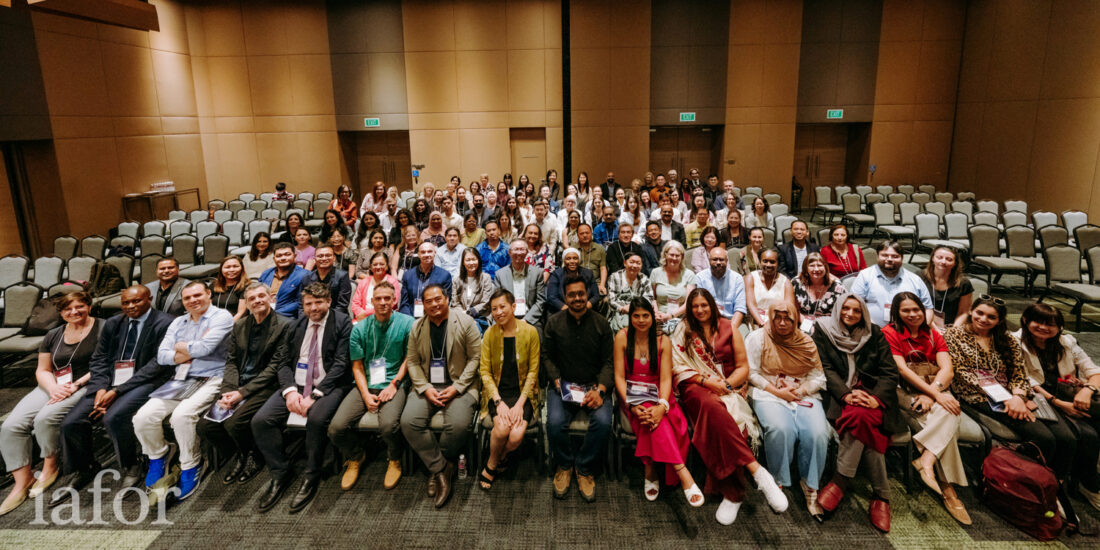
The 6th Southeast Asian Conference on Education (SEACE2026) and the inaugural Southeast Asian Conference on Arts & Humanities (SEACAH2026) were held from February 05-09, 2026, at the Singapore EXPO, Singapore. 356 delegates, representing 238 institutions from 50 countries across the world, discussed the intersection of technology and human value, and their implications within the education and cultural aspects.
The conferences addressed the core discourse of the risks and opportunities of integrating Artificial Intelligence in Education, and provided examples of good practices in transforming AI from a potential shortcut into collaborative learning partners. It is suggested that institutions should move beyond outdated policies and static prohibitions, as well as advocate for educators to evolve into active facilitators who cultivate AI literacy and evaluate the entire learning journey rather than just final products. Beyond the classroom, the conferences look into the impact of digital technology on cultural preservation, examining how virtual platforms and digital diplomacy both democratise access to heritage and introduce ethical questions about shared memory. The report also offers insights into the strategic management of international educational networks, emphasising that authentic interdisciplinary and intercultural engagement are crucial for building resilient careers in this modern, technological-driven society.
Conference Report and Intelligence Briefing 2026 – Issue 2 – SEACE/SEACAH2026
Editor: Joseph Haldane & Melina Neophytou
Authors: Umberto Ansaldo, Lisa Lim, Briar Pelletier & Apipol Sae-Tung
Published: May 22, 2026
ISSN: 2759-4939
In partnership with: The IAFOR Research Centre at the Osaka School of International Public Policy (OSIPP)
Subscribe and Stay Informed
Receive key insights directly to your inbox.
Stay informed of the latest developments in academia.
100% free to read, download and share.
Contents

Introduction
Written by Apipol Sae-Tung, IAFOR, Japan
We are living in a time where nearly every aspect of modern society is linked to digital transformation. In our quest to improve human life and accelerate growth, we have developed technologies that are increasingly determining our worldview and making decisions for us. What kind of knowledge is created and reproduced, and who has the power to create certain knowledge, is more and more left at the discretion of machines that are trained to make decisions previously made by humans. Technology is transforming the future of knowledge, including learning, the application of knowledge, skills, and even remembering. However, the foundational challenge we are facing is not the rapid advancement of technology itself, but rather how we preserve and elevate core human values within this landscape. Across explorations of cultural heritage, global networking, and academic integrity, technology should be utilised and designed to deepen human connections, foster inclusive cultural dialogue, and enhance our collective capabilities, rather than dictating our narrative or diminishing our cognitive skills.

IAFOR Chairman & CEO Dr Joseph Haldane delivered the Welcome Address at SEACE/SEACAH2026
On the other hand, this technological advancement is also transforming how we remember things, our shared history and memory, and our cultural heritage. Our history as humans is being rewritten, not by machines, but by a select few who have access to training them. Behind the advancement of technology hides widespread social injustice and an ambiguous future of knowledge creation and production. While technology can create wonders and make life easier, we should also be asking ourselves at what cost. What kind of injustices are produced on an educational, social, and cultural level when relying on AI and technology to produce knowledge for us, and when the generated knowledge goes unquestioned? How can we work together in our institutions and networks to mitigate the risks associated with unregulated technological use and to best leverage the positive influence of new technologies?
The discussions at the SEACE/SEACAH2026 conference in Singapore explored the evolving relationship between artificial intelligence and humanity, reiterating the importance of shaping AI as a tool that supports rather than replaces human agency. Speakers at the conference looked at the influence of AI and technology within education and cultural heritage, reiterating a message often concluded at IAFOR conferences that human-to-human interaction and communication are still highly valued and a remedy to isolation and the feared ‘overtaking’ by machines.
2. Taming Artificial Intelligence in Education
Written by Apipol Sae-Tung, IAFOR, Japan
Artificial Intelligence is evolving rapidly and becoming more efficient and productive at a pace we are not ready to follow. The incorporation of AI into education systems has been inevitable, and educational institutions and educators are currently experiencing the unintended consequences of unregulated AI usage. Some of the unintended consequences of the overreliance on AI for knowledge-generation and the completion of assignments involve cognitive offloading, loss of critical thinking, and an overall inability to learn. These consequences have sparked numerous debates about the dangers of AI usage and an overall repulsion against AI, as previously discussed at several IAFOR conferences. However, as many speakers at previous IAFOR conferences have noted, AI is here to stay; instead of discussing punitive measures against AI use, we had better focus on how we can leverage AI for improving the learning process and honing professional and human skills for the betterment of society. In other words, we need to work with AI and not against it. This is true on an individual and professional level, as much as it is on an institutional and international level. Collaboration on all levels is key in this endeavour.
This section outlines ideas on how to work with our students, institutions, and networks to leverage AI’s potential, as they were discussed by keynote speaker Professor Ben Leong, conference participants at the interactive Forum session, as well as IAFOR Chairman & CEO, Dr Joseph Haldane, and the Singapore Education Network’s (SEN) CEO, Michael Klemm, in a workshop around the importance of networks and collaboration.
2.1. Pedagogical Development and Skill Acquisition in the Age of AI
The rapid integration of artificial intelligence across all levels of global schooling systems offers immense potential, but also introduces significant risks to traditional learning structures. In his keynote presentation titled ‘Achieving Competency-Based Learning with LLMs,’ Professor Ben Leong of the National University of Singapore, and former Director of the Experimental Systems and Technology Laboratory at the Ministry of Education (MOE), Singapore, challenged the current perception of AI as a mere efficiency tool for students and teachers. Instead, he proposed a framework where AI acts as a sophisticated partner in pedagogical development and skill acquisition. This shift requires a deep understanding of both the technical capabilities and the human psychological response to automation. Professor Leong emphasised that the educational community stands at a critical crossroads regarding technological adoption. A collaborative international dialogue is necessary to navigate these changes effectively and ethically.
Professor Leong addressed the ‘AI Trap,’ which refers to the unintended consequences of digital over-reliance. He cited recent 2025 research from MIT indicating that excessive digital tool usage can actually hinder student achievement. OECD data was also presented to show a correlation between high digital consumption and a decline in mathematical proficiency. He addressed the issue of ‘cognitive offloading,’ where students use AI to bypass the essential mental labour required for deep learning. This phenomenon risks creating a generation that remains on the ‘wrong side of the skill curve’ compared to large language models. If students only use AI to generate outputs without understanding the underlying logic, their own writing and thinking skills will decline. Professor Leong illustrated this with a continuum showing that many students currently perform below the baseline of what advanced AI systems can achieve, and this disparity creates a significant challenge for educators who must ensure that students remain competitive and capable. Singapore has already responded to these concerns by implementing strict bans on mobile phone usage in K-12 classrooms. The core problem is not the technology itself but the way it encourages a passive rather than an active learning experience.

To address these systemic issues, Professor Leong advocated for a ‘pedagogy-first’ approach to AI development. He introduced the ‘ScholAIstic’ platform as a specialised tool designed to prioritise educational outcomes over mere technological flair. Unlike generic AI, this platform allows teachers to customise the personality and knowledge base of digital assistants. These AI ‘personas’ are grounded in specific course materials and assessment rubrics to ensure relevance and rigour. The platform aims to facilitate formative practice, which is the iterative process of learning through trial and error. The system helps students identify their weaknesses in real-time by providing consistent and immediate feedback, which transforms the AI from a simple answering machine into a rigorous tutor that challenges students’ assumptions. He also emphasised that the focus must remain on the cognitive development of the human learner at all times. Such specialised tools allow for a level of personalisation that was previously impossible in large-scale educational settings.
This technological solution seeks to reclaim the educational process by aligning AI capabilities with proven teaching methodologies. The practical utility of the ScholAIstic platform was demonstrated through several innovative simulation scenarios across diverse fields. For instance, nursing students use ‘patient bots’ to practice bedside manners and deliver difficult medical news with empathy. Law students engage with ‘courtroom bots’ to refine their cross-examination techniques and respond to unexpected legal arguments. A particularly unique application is the ‘parent bot’ designed to train new teachers in de-escalating tense school confrontations. These simulations provide a safe and controlled environment where students can fail without real-world consequences. It allows for high-frequency, deliberate practice that would be logistically impossible to organise with human actors. Each interaction is recorded and analysed by the system to provide the student with actionable insights for improvement. The automation of the interlocutor role has allowed universities to offer complex role-playing exercises to entire cohorts simultaneously. Professor Leong highlighted that these tools are particularly effective for developing soft skills that are often neglected in technical curricula. The successful implementation of these bots shows that AI can be a powerful engine for authentic, experiential learning.
In his concluding remarks, Professor Leong asserted that the primary differentiator in the future job market will be human-centric skills. While AI can efficiently handle technical tasks like coding or data entry, it cannot replicate complex human navigation. The ability to empathise, negotiate, and lead remains a uniquely human advantage that education must fiercely protect. He argued that the role of the teacher is evolving from a primary source of information to a facilitator of human experiences. AI should be viewed as an augmentation of the teacher’s reach, providing the scale needed for individualised practice. Furthermore, Professor Leong also advocated for educators to refocus their curricula on the art of human interaction, in teaching students not just how to use tools, but how to thrive in a world where many types of tools are available. The real challenge of the upcoming decade is not the advancement of hardware, but the refinement of pedagogical strategies.
The synthesis of human wisdom and artificial intelligence is the key to creating a resilient educational future. Professor Leong’s message was one of cautious optimism, provided that we remain intentional about the values we embed in our technology.
2.2. Leveraging AI as Learning Companion
Written by Apipol Sae-Tung, IAFOR, Japan
Back to Top
Delegates at the SEACE/SEACAH2026 conference also had a chance to discuss and share their thoughts on the rapid integration of AI in higher education in the Forum session titled ‘AI-Enabled Futures: Collaboration, Learning, and Strategic Decision-Making in Higher Education’. The onsite forum was led by Dr Daniel Hoffman of the University of Hawaiʻi at Mānoa, United States, as the respondent, moderated by IAFOR’s Academic Coordinator Apipol Sae-Tung. The online forum was moderated by Dr Melina Neophytou, IAFOR’s Academic Operations Manager, with Dr Eric Hawkinson of Kyoto University of Foreign Studies, Japan, serving as the respondent. The delegates agreed that AI is unavoidable and has disrupted traditional paradigms of learning, teaching, and administrative collaboration. However, rather than strictly prohibiting AI, the delegates recognised the urgent need to pivot educational strategies toward cultivating AI literacy, emphasising the learning process over final products, and navigating the complex ethical dilemmas of a technology that evolves faster than institutional policy.
The Forum initiated dialogue by exploring how deeply AI has embedded itself into the everyday lives and decision-making processes of educators and students. Delegates shared a wide spectrum of AI use, from managing personal self-care and travel itineraries to handling routine administrative data entry. In the educational context, educators frequently leverage AI for instructional design, generating lesson plans, drafting rubrics, and summarising meetings. However, this widespread usage is accompanied by concerns regarding the ‘enforcement illusion’ in educational settings. Delegates noted that despite setting parameters, educators cannot guarantee students will engage in the necessary struggle of learning rather than taking AI-enabled shortcuts. Furthermore, the seamless integration of AI into both professional and personal spheres has created a challenging blurring of lines between productivity tools and entertainment platforms. This ambiguity makes it increasingly difficult to maintain academic boundaries when the same platforms are used for leisure and coursework, and constant vigilance from educators to maintain balance is critical.
I have a very hectic routine, so I asked AI something really interesting, like ‘give me a good colour scheme for the day’. Yesterday, I wanted to go to the beach after a long day, so AI guided me, saying ‘No, your body is exhausted. You should get some sleep’. Sometimes I ask AI for help when I don't know how to control my kids.
- A delegate from Pakistan
We are struggling with how to systematically integrate AI into our master’s, undergraduate, or PhD programmes. It's like a moving target.
- A delegate from the United States
There's a bit of learning, but there's also a lot of entertainment that goes with the whole AI thing. Sometimes I think there's a blurring of these two when AI comes to the workplace. We should be a bit more vigilant.
- A delegate from Australia

While the technology disrupts traditional collaboration, failing to adapt professional coursework leaves institutions behind the technological curve. When asked how generative AI impacts professional coursework and team collaboration, polls in both sessions revealed that adoption has altered traditional workflows. A significant shift toward individualised work was observed, with delegates noting they increasingly rely on AI as a primary virtual colleague rather than consulting human peers. While this fosters individual productivity and provides immediate emotional support, it raises questions about the erosion of authentic human communication, credibility, and trust within institutions. Some delegates argued that generative models encourage intellectual laziness, bypass vital discourse analysis, and present ongoing risks of copyright infringement and data scraping. This shows the frustration and confusion higher education faces as it attempts to balance ethical rigour with technological advancement. Conversely, some delegates pointed out that resisting AI implementation entirely places students at a severe disadvantage, as industry leaders now mandate AI literacy as a core competency for employment.
I used to work individually, and I would get colleagues to check what I did, particularly when we were working on a collective course. Now I feel like I don't do that as much, and I feel like my students don't do that as much either, because they will check with AI instead of a person.
- A delegate from China
There is a danger of copyright infringement and misinformation bias. I do not encourage generative AI to my students because it promotes laziness. They will just ask AI instead of promoting critical thinking in the classroom.
- A delegate from the Philippines
The atrophy of skills is real with the use of AI among our students, but just imagine if you do not let your students use AI: they will enter the working world with people who use AI. What is going to happen to them?
- A delegate from Singapore

To address the threats AI poses to core learning processes, delegates shared methods to enforce ethical, collaborative, and inclusive AI usage and guide students to use them as a collaborative partner rather than a shortcut. The main strategy discussed was to shift assessment methodologies away from grading final products and more toward evaluating the learning journey. Good practices in classrooms were shared, such as requiring students to submit their full AI prompt histories to demonstrate transparency and critical engagement or having students complete initial drafts on paper during class to establish a baseline of their authentic voice before applying AI enhancements. Discussions also revealed the limitations of current AI models regarding inclusivity, noting their frequent lack of cultural, emotional, and gender intelligence. Through these deliberate, process-focused strategies, educators can demystify the technology while maintaining academic rigour. To counter the technological bias, delegates suggested utilising specialised, culturally intelligent AI tools and setting firm parameters that require students to input their own human identity and insights into AI-assisted work.
When I was using AI, it wasn't taking into account things like gender intelligence, emotional intelligence, cultural intelligence from a race or religion perspective. So, if you are creating tools, they should help with ethics, morality and inclusivity.
- A delegate from Australia
I picked out a few terms which were very clearly not the students’ own ideas because, at an undergraduate level, there is no way they could have come up with that idea. They're engineering students talking about a literary text. They cannot talk about power structures or deconstruction because it was not taught to them. … They realised that they were lying and that they didn't know about the subject, but they were willing to learn. The subsequent submissions were actually remarkable because they shifted the use of AI for grammar, they tried to understand, and they came back asking me what a certain word means. So that one incident turned into a teaching point for me. Eventually, they did use AI. A lot of them are first or second-generation learners. They're not fluent in English. But by the time their submission came out, the statements were grammatically correct, but the ideas were their own.
- A delegate from an unidentified country
The only requirement I have is for them to be very transparent about how they use AI. If they use AI, what I want them to do is submit a copy of the transcript of the chat conversation. Then at least I can track how they've used AI in order for me to help them be more productive and more critical about the use of AI.
- A delegate from the United States

IAFOR Academic Coordinator Apipol Sae-Tung served as moderator for The Forum
While concerns over academic rigour and learning process are important, the Forum also asked delegates to take into consideration the human value and skills that are being affected by the rise of AI. Delegates felt that several human skills, such as critical thinking, writing, summarising, translation, and authentic communication, are now being replaced by AI. Moreover, there is a growing generational disconnect, as older generations developed cognitive skills organically prior to AI, while students today lack the prerequisites to build these critical reasoning abilities. Because students often approach AI without foundational skills, they are more prone to misinformation and the outsourcing of their pedagogical reasoning. In response to this concern, delegates advocated for a fundamental transformation of the educator's role, transitioning from traditional teachers to active learning facilitators. Recommended best practices included consciously designing offline, AI-free learning opportunities within the classroom to guarantee the development of core competencies. Alternatively, educators suggested assigning AI-heavy research tasks as homework, which are then brought back into the classroom for rigorous, human-led critique and ethical evaluation. This hybrid approach ensures that skills are intentionally amplified and transformed rather than entirely replaced.
We teachers lived in a generation wherein we had the opportunity to develop those human skills, but this new generation of students lives with AI already there. We may take it for granted that students should already know these things by the time they have reached high school. So there is a disconnect between what I know, what I expect my students to know, and what the students should have already known by now. For example, if they have reached high school, they should already have critical thinking skills, know how to summarise and so on. These disconnects are the education gap.
- A delegate from the Philippines
We are no longer the traditional teacher, but we are turning into facilitators. At my institution, we have adopted a process where we are using AI outside the classroom to complete tasks, and then bring the output back into the classroom to scan what is really ethical, what is not, and what is something we can use or not. Students then start to become more critical about what they are finding in AI because they know that not everything AI produces is acceptable.
- A delegate from the Netherlands
I think to use AI ethically and also enjoy the affordances of AI, there is a prerequisite, which I think our students do not have. They didn't have those skills to begin with, so they use these tools in different ways. For educators, AI was not a part of our learning journey, so it's also a learning process for educators to understand how we use AI in our lives and in our work.
- A delegate from the Philippines
The final point of discussion was on the effectiveness of institutional AI policies in managing these unprecedented educational shifts. Delegates reflected on the widespread administrative ambiguity, revealing that many institutions either completely lack specific AI policies or rely on ‘outdated’ academic dishonesty frameworks that fail to address the nuances of generative technologies. Because AI capabilities evolve faster than institutional governance, university leaders are struggling to provide comprehensive guidelines, often leaving the burden of policy creation entirely on individual professors. Approaches varied across campuses, with some departments mandating final declarations of non-AI use, while others evaluated policy violations strictly on a case-by-case basis. A highlighted success story involved transitioning from a rigid, non-existent policy to a flexible system, empowering faculty to clearly define acceptable AI usage for specific assignments. Despite the fragmented landscape, delegates agreed that establishing communities of practice and providing continuous professional development are essential for supporting faculty through this regulatory uncertainty.
We do have an AI policy, so the use of AI is a little ambiguous. A lot of software is actually not able to detect AI-generated content either. As a faculty, I do know that there has been a use of AI. I think we've kind of given up at one point and ask students to just declare if they have used AI.
- A delegate from the United States
We have guidelines, but we don't have policies. We have a code of conduct if we're running into issues, but we don't know how to adjudicate any complaints now because there are so many sides to it. A faculty or a programme may find the use of AI as misconduct for academic integrity, but another department may say that if the student has a rationale for why they use AI and cite it, they are okay with it.
- A delegate from the United States
We came up with a baseline policy, but we found that we couldn’t make a blanket one. We have a ‘traffic light’ system, so red for no AI, yellow for some AI, and green for AI. Obviously, there are always rules; you never copy and paste, always criticise your work. We have a menu of policies as a kind of common framework between classrooms that faculty can pull from, and the backend has helped with the enforcement.
- A delegate from Japan
AI in education is simultaneously an indispensable engine for productivity and a disruptor of traditional cognitive development and institutional integrity. The Forum discussion revealed that the path forward cannot rely on static prohibition, but must instead involve dynamic, process-oriented assessments, the modelling of critical AI literacy, and the cultivation of flexible, localised policies. Moving forward, institutions must prioritise continuous professional development for educators and foster collaborative communities to navigate this moving target. Preparing students for an AI-enabled future requires educators to blend technological capabilities with uncompromising human insight, ensuring that AI amplifies, rather than abolishes, the core elements of human learning and communication.
2.3. Building Networks and Collaboration
Written by Apipol Sae-Tung, IAFOR, Japan
Back to Top
Flowing from discussions at The Forum, it is evident that factors in our inability to handle the consequences of introducing AI into the education system include the lack of a common mindset and general knowledge about AI. The demarcation of institutional departments and institutional rigidity hinders meaningful interventions in regulating AI usage. This can be true for any societal or national issue we are facing as individuals, professionals, or citizens: isolation rarely leads to innovation. This is where collaboration and the cultivation of networks can help share experiences and knowledge not only around a specific issue, but also in how to cultivate an open and collaborative mindset, inclusive thinking, and dealing with human-to-human communication.
In the roundtable session titled ‘Building Networks, Building Careers,’ Dr Joseph Haldane of IAFOR, Japan and Mr Michael Klemm of the Singapore Education Network (SEN), Singapore, shared the strategic value of creating and sustaining professional networks, and more specifically, on the management of international and regional education networks. Dr Haldane outlined IAFOR's growth from its origins in Japan to an organisation that now hosts around 6,000 presenters annually across Asia, Europe, and North America. He emphasised that IAFOR operates at the intersection of international, intercultural, and interdisciplinary engagement. The challenge of interdisciplinary engagement, Dr Haldane pointed out, is that academics often express interest in interdisciplinary work, but frequently find it uncomfortable to step outside their established epistemic zones. To succeed, a network must create a supportive environment for this necessary intellectual growth.
Adding to the importance of networking, Mr Klemm shared the trajectory of SEN, a regional alliance founded in 2020 that has grown to include over 3,000 education professionals and organisations. Focusing heavily on Southeast Asia, SEN serves as an umbrella ecosystem connecting academic institutions, tech companies, governments, and non-profit organisations. He noted that it is important to a network's structure, such as whether it operates virtually or in person, and if it is exclusive or inclusive. For example, while SEN is generally open to anyone in education, networks sometimes need to ring-fence specific subgroups to provide targeted professional development.
The roundtable emphasised that strong networks transcend individual institutions, providing a lasting professional home for members throughout their careers. To start being a part of a network, the discussants suggested that delegates start small by gathering a dedicated local group and building a community of practice. This will enable the network to establish the institutional grounds and proof of concept needed to partner with larger universities and corporate networks.

Professor Umberto Ansaldo, linguist and Dean of the College of Arts and Sciences at VinUniversity, Vietnam, served as moderator of the panel.
3. Transforming Cultural Heritage and Memory in the Digital Age
Written by Professor Lisa Lim, UNESCO Chair in Environmental Leadership & Professor Umberto Ansaldo, VinUniversity, Vietnam
Beyond the preservation of traditions, heritage is increasingly understood as a dynamic practice of dialogue, where cultural memory is negotiated and reshaped. As digital technologies transform how traditions are archived, performed, and circulated, heritage is emerging as both an opportunity and a site of tension: it can function as a tool of diplomacy and soft power, while also becoming a space of contestation.
To explore these developments, the panel ‘Heritage for Cultural Dialogue: Digital Futures and Shared Memory’ brought together scholars and practitioners working across Asian contexts, with contributions from sociologist Professor Tim Winter, Cluster Leader of the Inter-Asia Engagements Cluster, Asia Research Institute, National University of Singapore; cultural anthropologist Professor David Ocón, Associate Faculty at Nanyang Technological University and Singapore Management University; linguist Associate Professor Lisa Lim, Director of Engagement and Development for the UNESCO Chair in Environmental Leadership, Cultural Heritage, and Biodiversity, at VinUniversity, Vietnam; and creative arts and culture professional Mr Jervais Choo, Deputy Director, National Heritage Board, Singapore. Professor Umberto Ansaldo, linguist and Dean of the College of Arts and Sciences at VinUniversity, Vietnam, as convenor and moderator of the panel, posed several questions for deliberation. What is heritage diplomacy? Why does digital heritage have the potential to change our future? How can digital heritage be leveraged to shape cultural memories? Should heritage literacy and engagement with heritage play a role in educating future generations? Who are the storytellers reshaping culture for the future?

3.1. Heritage Diplomacy and Transnational Frameworks
Dr Tim Winter set the stage for appreciating the Southeast Asian heritage context – where postcolonial identities remain in flux, even while rapid transitions to post-industrial modes of cultural and economic production have occurred, and cultural heritage, which is not bound by 19th/20th-century national boundaries, nonetheless continues to be framed largely within statal narratives. Heritage diplomacy offers a framework for addressing these tensions, along three key dynamics:
- Transboundary cultural flows: Modern political borders do not align with cultural traditions and practices – religion, language, music, food, festivals, landscapes, artistic traditions; these need to be understood as trans-regional and trans-oceanic phenomena.
- Increasing regional cooperation: Intra-Asian collaboration – amongst non-state actors, NGOs, universities, and organisations such as UNESCO – has intensified over the past two decades, particularly in promoting forms of shared heritage, and moving away from national political framing.
- Geopolitical mobilisation of heritage: Major actors, notably China and India, are increasingly integrating heritage into foreign policy agendas, establishing new forms of multilateral cooperation and governance.
These developments raise critical questions about power, funding, and narrative control. Does heritage diplomacy produce new forms of cultural preservation that would not be happening if a nation were acting through its own ministries? What narratives of history are coming to the fore in Asian narratives in the way that European collaborations never understood or gave significance to? What issues arise with sources and targets for funding? What silences are being produced by these new forms of cooperation within the region? Further, with digital heritage diplomacy now very much so driven by larger nations, a new digital divide is emerging through the internationalisation of a dominant ecosystem of digital heritage and digital heritage diplomacy, which holds implications for small countries, both in terms of new forms of empowerment but also more complicated ways in which these countries are seeing their culture, history, and heritage being framed, narrated, understood, and valued through these bigger players.
3.2. Digital Heritage and the Production of Memory
Dr David Ocón examined how digital technologies are transforming not only access to heritage but also the nature of memory itself. Drawing on the example of the UNESCO World Heritage Site of Roca del Moros in Catalonia, Spain, whose Levantine art (10th-5th millennium BCE) and Neolithic representations (5th-2nd millennium BCE) engraved in the rock have been complemented with virtual reality (VR), he highlighted how immersive digital experiences often surpass physical engagement, particularly for younger audiences. Three key implications emerge:
- Digital heritage does not merely store memory; it actively reshapes and creates new memories, so as to comprise narratives for the new generation. Who becomes the new mnemonic authority?
- Digital infrastructures embed political and cultural values, positioning heritage within broader dynamics of soft power and digital diplomacy. Can digital heritage ever be geopolitically innocent?
- Processes of digitisation select, frame, and scale heritage, such that visibility is never neutral. Are we preserving the past or engineering future memories?
3.3. Heritage Literacy, Community Engagement, and Resilience
Dr Lisa Lim emphasised the centrality of heritage literacy in education and sustainability, highlighting three key dimensions.
- Intangible cultural heritage: Cultural heritage must be understood as encompassing both tangible and intangible dimensions, with language an important focus and playing a critical role as intangible cultural heritage, at the intersections with identity, environment, health, and indigenous knowledge systems.
- Collaborative knowledge production: Heritage is an arena for dialoguing and negotiating cultural memory, illustrated in a recent documentation of an epic tale of the Bahnar ethnic minority people in Vietnam, a project of the UNESCO Chair at VinUniversity, which emerged through collaboration between researchers and community members across different generations, and involved multiple media formats, including print and e-books. Such processes foreground inclusivity and continuity, but also hold implications for how traditions are archived, performed, and circulated, and prompt reflection on the reshaping and the afterlives of heritage.
- Heritage and resilience: Digital tools such as interactive Talking Dictionaries demonstrate how linguistic documentation can – and should – encode ecological knowledge, linking language to environmental practices, resource management, and cultural resilience. In the context of global environmental challenges, heritage becomes a resource for adaptive knowledge and sustainability.

Mr Jervais Choo, Deputy Director, National Heritage Board, Singapore
3.4. Digitisation, Accessibility, and Capacity Building
Jervais Choo focused on the prioritisation of heritage digitisation in the museum sector. With only a small proportion of collections physically accessible at any time, digital technologies play a crucial role in expanding public accessibility and engagement, with initiatives resting on three strategic pillars:
- Heritage conservation: Digital visualisation – through techniques like 360 documentation, LIDAR and underwater scanning – and use of immersive media enhance both preservation and interpretation of cultural sites.
- Education and accessibility: Heritage conservation and digitisation need to be pedagogy-led, and are increasingly involving collaboration with educators and integration into classroom learning.
- Capability development: Sustainable digitisation requires building expertise and ownership across stakeholders, from specialists to the general public.
The panel highlighted how heritage is increasingly situated at the intersection of technology, power, and cultural identity. Digital transformation is not simply extending existing practices but fundamentally reshaping how memory is produced, circulated, and contested. Across contributions, a shared concern emerged: how to balance the growing influence of large technological and geopolitical actors with the need for pluralistic, inclusive, and community-driven approaches to heritage. Academic institutions and cultural organisations are uniquely positioned to mediate these tensions. Through research, education, and collaboration, they can contribute to the development of ethical digital practices, inclusive datasets, and new forms of expertise capable of navigating rapid technological change. Ultimately, the challenge is not only to preserve heritage but to ensure that emerging digital futures enable equitable participation, transnational dialogue, and cultural resilience.

4. Conclusion
Written by Apipol Sae-Tung, IAFOR, Japan
The discourse surrounding the integration of AI and digital technologies into the educational and cultural frameworks showed that not only have we adopted them as new tools in our everyday lives, but also actively reshaped the future of human cognition and shared memory. The path forward in education cannot rely on static technological prohibition, but should instead embrace dynamic, process-oriented assessments that prioritise the learning journey over the final output. Educators have always been about training in education, guiding, and mentorship, but are being forced to respond to these changing times to transition from their role as primary sources of information to facilitators of human experiences. In this way, we can cultivate essential AI literacy while safeguarding critical thinking. Beyond the classroom, the synthesis of human wisdom and technology extended to the preservation of our cultural heritage, where digital infrastructures possess the immense power to both democratise access and engineer new collective memories, as well as erase them. Initiatives that digitise artefacts, capture dying oral traditions, and document indigenous ecological knowledge demonstrate how technology can transcend borders to sustain the intangible dimensions of human identity.
Addressing these challenges requires communities of practice and professional networks that foster intercultural and interdisciplinary collaboration across institutional and national boundaries. In the end, whether we are deploying specialised AI tutors or creating virtual reality archives, we must place the human at the centre of the development of our digital futures to ensure that technology serves as a powerful tool to amplify, rather than diminish, the essence of what it means to be human.


From left to right: Mr Michael Klemm, Mr Kim James Waldgrave, Mr Goh Jon Keat, Professor Carol Hargreaves, Dr Joseph Haldane
5. Networking and Cultural Events
Written by Briar Pelletier, IAFOR, Japan
5.1. Singapore Education Lounge
IAFOR conferences leverage the place and space in which they take place, addressing global issues while highlighting local solutions. To this end, IAFOR co-hosted a pre-conference networking event in partnership with the Singapore Education Network (SEN), Aventis Graduate School and Inspera on February 04, 2026. The event allowed conference participants to get in touch with local educators in Singapore and exchange insights on education from the local to the global. While networking was at the heart of the event, a panel titled ‘Modern Education: Balancing Technology & the Human Touch’ prepared the ground for this academic exchange, discussing the integration of AI into education. Speakers included Dr Joseph Haldane of IAFOR, Japan, Mr Kim James Waldgrave of Inspera, Mr Goh Jon Keat of Aventis Graduate School, Singapore, Dr Juergen Rudolph, Editor-in-Chief of the Journal of Applied Learning & Teaching, and moderator Professor Carol Hargreaves, previously Director of the Data Literacy Programme at the National University of Singapore. The event was well-received by both local and international participants, and IAFOR is looking to partner with more networks and associations in the future to offer meaningful exchange between the local and the global across borders of nation, culture, profession, and discipline.


5.2. The Lion Dance
The conference was held just before the Lunar New Year, a cultural tradition spanning millennia and celebrated across ASEAN today, and one that was incorporated into the conference cultural programme through Singapore’s celebratory Lion Dance. This performance tradition is believed to bring prosperity, joy, and happiness to homes and businesses that invite dance troupes to perform onsite to ensure a strong start to the New Year. IAFOR invited the Lion Dance Singapore dance troupe to ring in the Lunar New Year alongside the delegates at SEACE/SEACAH2026.
The Lion Dance is a traditional, theatrical art form originating from China, with a history of over 5,000 years. It involves vibrant and elaborate lion costumes, intricate choreography by acrobatic performers, and various percussion instruments, including drums, gongs, and cymbals, that construct the ‘heartbeat of the lion’. The dance movements convey both fierceness and curiosity, symbolising wisdom and good fortune for the new year, as well as unity and strength, as shown through the lions’ driving away evil spirits.
Lion Dance Singapore troupe members arrived with two lions, each operated by two performers from inside the colourful and extravagantly constructed costumes, coordinating the dance from within: one directs the lion’s expressive head and facial movements, with the other commanding the body’s mirroring footwork. The troupe gave a performance on stage and worked the floor, moving between the audience and greeting delegates in the crowd.
In Singaporean tradition, the Lion Dance culminated with the Cǎi qīng (採青), or the ‘plucking of the greens’, a ritual performed by a lion tossing lettuce leaves into the crowd, symbolically spreading good fortune to those nearby. Dr Joseph Haldane, IAFOR Chairman and CEO, joined the celebration, receiving a lion’s offering of prosperity through a gifted banner and oranges during the performance.


5.3. Conference Dinner
The conference’s first plenary day finished with the Conference Dinner, which was held at the Singapore Cricket Club, Singapore’s oldest sports and social club. Delegates who joined us for dinner were given a uniquely Singaporean social and culinary experience that has been cultivated over 150 years, traversing Singapore’s myriad traditions through the Club’s historic venue, its culture, and selection of multicultural fare.
The Singapore Cricket Club’s colonial history and evolution provided an apt backdrop to our own Forum. The Club itself has remained a staple within the city-state’s transformation from a colonial port to an independent city-state: established in 1852 during Singapore’s colonial era, the club catered exclusively to British merchants. Over time, and as Singapore embraced multiculturalism and independence, the Club, too, became an inclusive, diverse space, where fans of sports such as cricket, rugby, and soccer could gather together and bond through their mutual love of sports. Today, the Club is the premier sports and lifestyle club in Singapore, maintaining a central role in Singapore’s sporting history and culture.
The Club’s fixture within the community, especially its own shift alongside Singapore’s own transformation into one of the world’s most ethnically and religiously diverse nations, provided an opportunity for our own international and intercultural Forum to connect within a historic social institution that has also been shaped by a multicultural, diverse, and growing network.
Subscribe and Stay Informed
Receive key insights directly to your inbox.
Stay informed of the latest developments in academia.
100% free to read, download and share.
Key Statistics

Delegate World Map & Country Breakdown

Total Number of Attendees: 356
Total Number of Countries Represented: 50
| Country | Count |
|---|---|
| Japan | 42 |
| Philippines | 37 |
| Taiwan | 33 |
| United States | 28 |
| Singapore | 23 |
| India | 22 |
| China | 17 |
| Hong Kong | 15 |
| South Africa | 14 |
| South Korea | 14 |
| Vietnam | 10 |
| Israel | 8 |
| United Arab Emirates | 8 |
| Indonesia | 7 |
| Italy | 6 |
| Malaysia | 6 |
| Australia | 5 |
| Germany | 5 |
| Thailand | 5 |
| United Kingdom | 5 |
| Saudi Arabia | 4 |
| Slovenia | 4 |
| Austria | 3 |
| Canada | 3 |
| Bangladesh | 2 |
| Country | Count |
|---|---|
| Finland | 2 |
| Ireland | 2 |
| Maldives | 2 |
| Qatar | 2 |
| Turkey | 2 |
| Armenia | 1 |
| Bahrain | 1 |
| Brunei | 1 |
| Chile | 1 |
| Estonia | 1 |
| Jamaica | 1 |
| Jordan | 1 |
| Kuwait | 1 |
| Malta | 1 |
| Mexico | 1 |
| Nepal | 1 |
| Netherlands | 1 |
| New Zealand | 1 |
| Oman | 1 |
| Pakistan | 1 |
| Slovakia | 1 |
| Spain | 1 |
| Sweden | 1 |
| Trinidad and Tobago | 1 |
| Ukraine | 1 |
Subscribe and Stay Informed
Receive key insights directly to your inbox.
Stay informed of the latest developments in academia.
100% free to read, download and share.
